
Independence Demolition Pros: Seven House Demolition Mistakes That Cost Independence Owners
Independence Demolition Pros sees the same handful of mistakes behind most of the expensive demolition stories in Independence, Missouri, and none of them is about the excavator. They are about what happens before it arrives and after it leaves. Here are seven, with what each one costs, so a $10,000 to $21,100 teardown stays that and does not become something larger.
A basement filled in one pour to save $1,500 in compaction becomes a sunken lot that costs $5,000 or more to dig out and redo, usually discovered by the next owner's builder, which is the single most expensive mistake on this list.
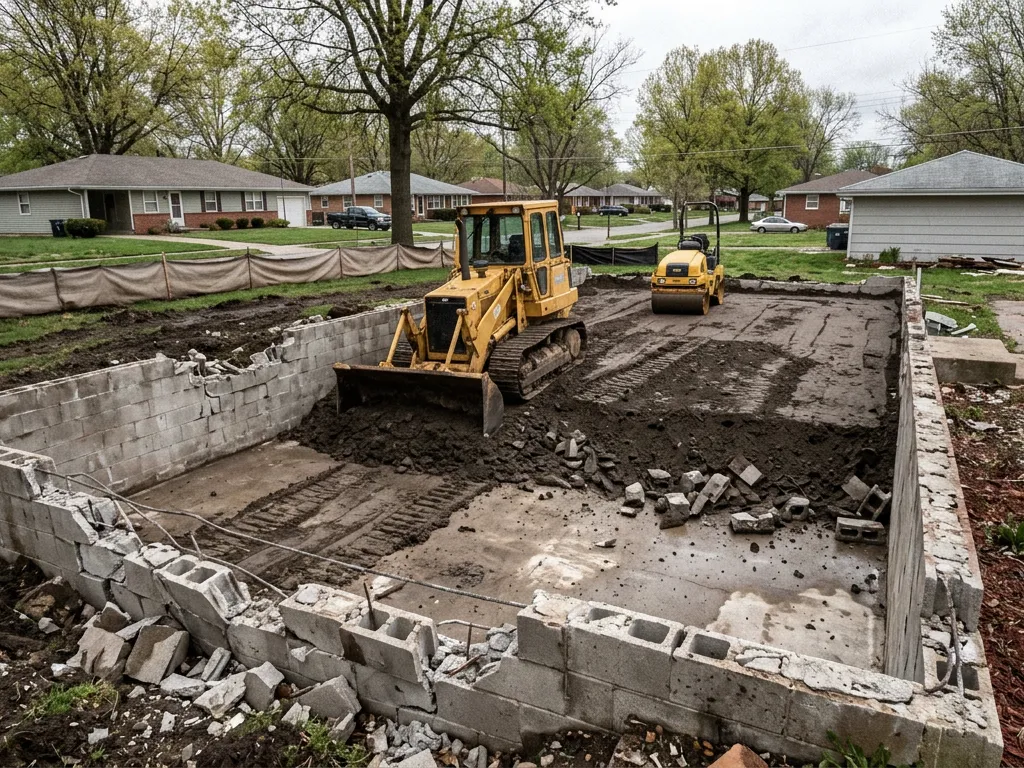
1. Filling the basement in one pour
The loess clays under Independence drain slowly, and fill dumped into a basement in one afternoon has air in it that consolidates for years. The lot sinks, ponds, and sinks more; anything poured over it cracks. The right job breaks the walls below grade, cracks the slab so it drains, and places the fill about a foot at a time with a compactor over each lift. It costs a day of machine time more. Skipping it costs the re-dig. The basement fill-in page covers the volumes.
2. Skipping the asbestos inspection or the notice
Missouri requires a licensed asbestos inspector before demolition of a regulated structure and a Notification of Demolition to the Department of Natural Resources ten working days ahead, with the report attached, even when nothing is found. The inspection is $600 to $1,500 for a house. Demolishing a house with asbestos siding or tile in it and cleaning the lot afterward runs $10 to $30 per square foot, before any penalty, and the City of Independence wants the hazardous-material landfill tickets before its final inspection. Test first, file the notice, then demolish.
3. Starting the disconnects before the submittal
The City's checklist says it in capital letters: the submittal must be completed before any utility disconnection starts. Owners who call the utilities first, thinking they are saving time, end up with a permit application that cannot be verified against disconnects that already happened, and with erosion control that was supposed to go in before the meters came out. File the application, then let the City pull the meters, which it does automatically.
A written price from a local demolition contractor costs nothing to ask for, and it settles most of the questions in this guide for your own property.
Call (816) 846-23474. Signing a quote with no finish line
"Demolish house and haul" is not a scope. A complete quote names the structures coming down (the City requires every accessory building and sign to go with the main one), what happens to the slab and the driveway, how the basement is filled, whether the lot is graded and seeded, and where the debris goes. Two quotes that differ by $3,000 usually differ in what they leave behind. Read the finish line before the number.
5. Forgetting what is in the ground
A septic tank on a lot that predates the sewer, a cistern under a 1920s house, a buried heating-oil tank from before natural gas, a well on a former farmstead in Grain Valley: each has its own closure step, and each costs more when the bucket finds it than when the quote names it. Walk the lot and the old photographs with the contractor, and ask for an allowance in the quote for what the ground may hold.
6. Tearing into a fire or storm loss before the release
An insurer's written release, and a fire investigator's where one is involved, come before any demolition of a damaged house. Starting early can void a claim worth far more than the teardown. Fence it, tarp it, photograph it, and wait; the fire-damaged demolition page covers the sequence.
7. Ignoring the historic review and the neighbors
Every Independence demolition application is screened by Historic Preservation staff, and a house on the older streets found significant goes to the Heritage Commission. Owners who assume that step does not apply to them lose weeks when it does; ask early. And tell the neighbors the date: a teardown is loud for two days, the trucks need the street, and a neighbor who was warned does not call the City on the morning the excavator arrives. The City's checklist and ordinance are at independencemo.gov.
The one habit that avoids all seven
There is an eighth mistake that belongs to the contractor rather than the owner, and the owner can still catch it: leaving the sewer open. Independence kills the sewer at the main under a Municipal Services inspection, and a contractor who skips that step and pushes the house in over a live lateral leaves an open pipe under the fill that takes groundwater, then sinks, then backs up into the main. The City inspects the kill with the silt fence for that reason. Ask on the walk-through who schedules the sewer kill and when; a contractor who answers with a date and a department has done this before.
Have the contractor put the sequence in writing with the price: inspection, submittal, disconnects, erosion control, sewer kill, permit, teardown, fill in lifts, grade, final inspection. A quote that lists those steps in that order has avoided every mistake on this page, and the published ranges on the cost guide will tell you whether its number is honest.
Primary sources: the City of Independence checklist at independencemo.gov, the Missouri asbestos requirements at dnr.mo.gov, the federal asbestos program at epa.gov, and Kansas City's pre-fill basement and sewer inspection rule at kcmo.gov.
Frequently asked questions
Questions this guide gets asked
What is the most expensive house demolition mistake?
Filling the basement in one pour. It saves about $1,500 in compaction and produces a sunken lot that costs $5,000 or more to dig out and redo.
Do I really need the asbestos notice for a single house?
Missouri requires the licensed inspection before demolition and asks for the notice on single-family teardowns; it is mandatory for commercial buildings and four or more residences. The inspection costs $600 to $1,500. Skipping it can cost $10 to $30 per square foot in cleanup.
Can I have the utilities disconnected before I apply for the permit?
Not in Independence. The checklist requires the submittal to be complete before any disconnect starts, and the City pulls the water and electric meters itself once the application is in.
How do I compare two demolition quotes?
By the finish line, not the number: what comes down, what happens to the slab and the basement, whether the lot is graded and seeded, and where the debris goes. A lower number usually leaves something out.
What should I tell the contractor about the lot?
Anything that was ever in the ground: septic tank, cistern, oil tank, well, old foundations. Each has its own closure step and costs less when it is priced in than when it is found.
Need demolition in Independence or the eastern Kansas City metro?
One call describes the job to a local contractor who prices it in writing after a walk-through. The line is (816) 846-2347.
More from the guides
-
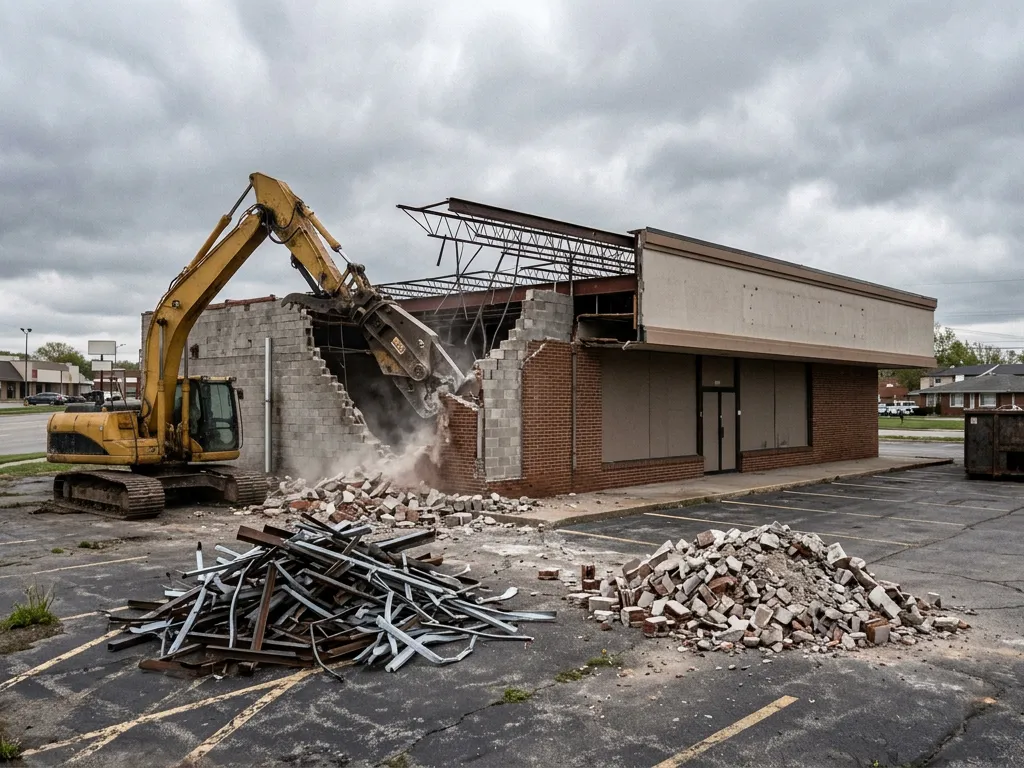
Best demolition companies in Independence
Five demolition operations serving the eastern metro, ranked by verifiable history, this site last.
Read more
-
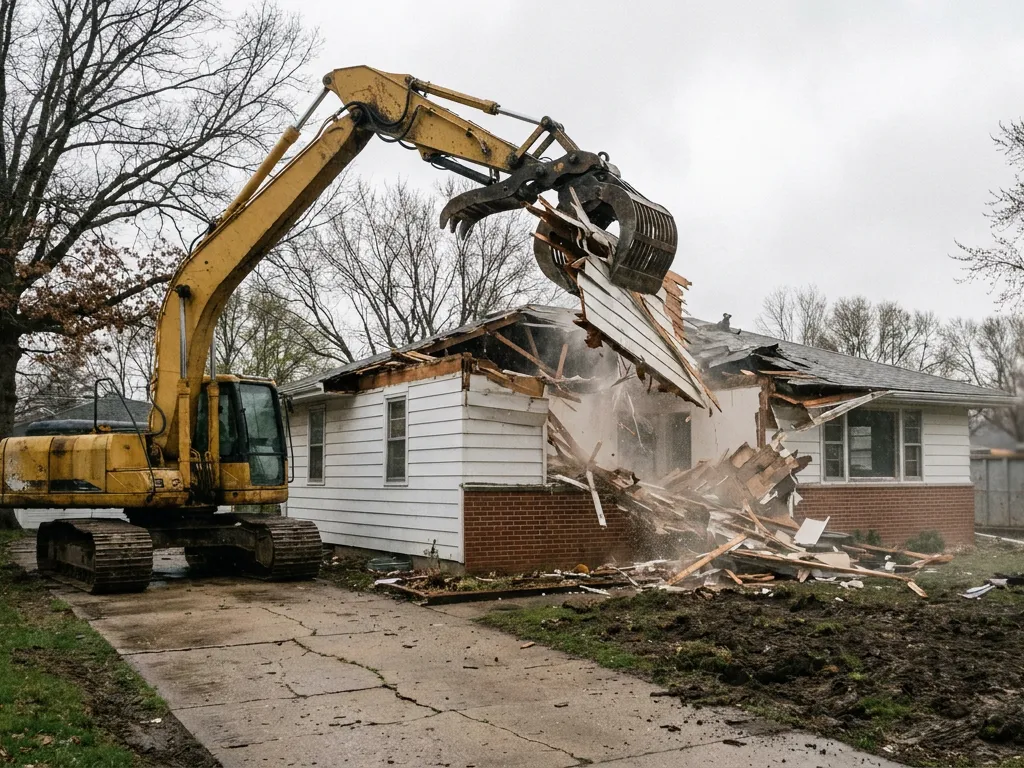
House demolition cost in Independence
Every published range from a chimney to a commercial building, and what moves each number.
Read more
-
The Independence demolition permit
The application, the insurance naming the City, the meter pulls, the sewer kill, the fees and the historic review.
Read more