
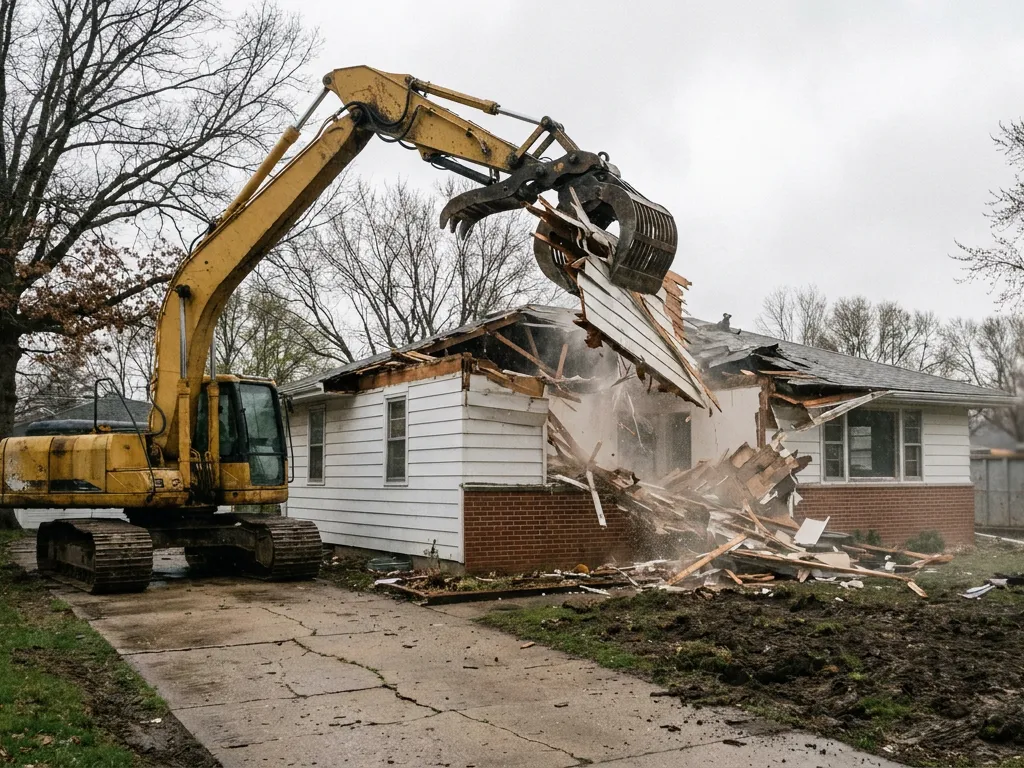
Condemned, vacant and posted structures
Independence Demolition Pros: Dangerous Building Demolition in Independence, Missouri
Houses and buildings the City of Independence has designated dangerous, taken down by the owner before the City does it and bills the lot, with the paperwork aligned to the notice.
- Independence and 10 towns within 20 miles
- Written price before any work starts
- City permit, utility and asbestos steps explained
- Local, licensed, insured contractors
Independence Demolition Pros connects Independence owners who are holding a dangerous-building notice with local contractors who can take the structure down inside the City's deadline. Independence carried 143 designated dangerous buildings at last report and aims to demolish about five a quarter on its own account; an owner who acts first chooses the contractor, the price and the date, and keeps the City's demolition cost off the lot.
Letting the City demolish a posted house saves the owner nothing: the City's cost, in Kansas City's experience $5,500 to $7,000 a house and often more with abatement, lands on the property as a lien, while an owner's own teardown at $10,000 to $21,100 is a price the owner negotiated and can time to a sale or a rebuild.
What it costs
$10,000 to $21,100
The same Kansas City house range (HomeBlue, May 2024) applies, because the structure and the basement set the price. A long-vacant house often carries extra: a basement full of water and debris, a collapsed roof already in the structure, asbestos siding and floor tile from its era, and a lot that needs clearing before the machine can reach it. Garages and accessory structures posted with the house come down with it.
Calls answered Monday to Friday 7 a.m. to 6 p.m., Saturday 8 a.m. to 2 p.m.
What a dangerous-building notice usually follows
- Years of vacancy with the roof open and the floors failing
- A fire or storm that left the structure standing but unsafe
- Exterior walls leaning, buckling or pulling away from the foundation
- Repeated code cases, break-ins and a lot the neighbors have complained about
- An estate or a tax sale where nobody has maintained the house
How the Independence process runs
The City designates a structure dangerous under its property maintenance and dangerous-buildings ordinances, notifies the owner, and gives a period to repair or demolish. Repairs are the owner's responsibility; if nothing happens, the City contracts the demolition and recovers the cost, with the lot carrying the bill. The City reported a 40-day average abatement closure and about $200,000 in annual demolition funding in 2019, and 34 demolitions that fiscal year against a goal of 20. An owner who calls a contractor when the notice arrives can usually file the permit, get the asbestos inspection done and take the house down inside the City's timeline.
- Notice
- Repair or demolish inside the City's period; the City demolishes and bills otherwise
- Permit
- Same City checklist; a City-initiated job substitutes a Notice to Proceed for the contract
- Asbestos
- Licensed inspector first; vacant pre-1980 houses are rarely clean
What a long-vacant house hides
Vacant houses are the hardest teardowns on the board. The basement is often full of water, the roof may already be in the living room, copper has been stripped and the panel left live, and the yard has grown over the access. The crews we work with walk the lot before pricing, confirm the utilities with the City (Independence pulls its own meters once the permit is in), and price the extra loads. Asbestos is almost always a question: the 1950s and 1960s houses that make up most of the City's list carry siding, tile and pipe wrap from the asbestos era.
Holding a notice with a date on it?
Read the date and the address to a local contractor. They will say whether the permit, the inspection and the teardown fit inside it, and put the price in writing.
Call (816) 846-2347Kansas City's list and the metro pattern
Kansas City runs the largest dangerous-buildings program in the metro. It demolished about 100 to 130 houses a year for most of the last two decades, took down 609 under a $10 million bond program between 2016 and 2019, and still carried 343 on its list at the end of that run. Its ordinance lists the conditions that make a building dangerous, from leaning exterior walls to fire, wind and flood damage, and it exempts those buildings from the 50-year historic demolition review. The pattern is the same in every city in the circle: act before the notice turns into a lien.
Dangerous buildings in the towns around Independence
Every city in the service area has a version of the process. In Kansas City the owner needs a Class I or Class II licensed demolition contractor; in Raytown and Grandview the code office that sent the letter also issues the permit. Where the damage came from a fire, see fire-damaged house demolition for the insurance sequence.
Dangerous Building Demolition available in
Frequently asked questions
What owners ask before a teardown
How much does it cost to demolish a condemned house in Independence?
The same Kansas City house range applies, $10,000 to $21,100, with a flooded basement, a collapsed roof, asbestos and an overgrown lot adding to it. Doing it yourself keeps the City's cost and lien off the property.
What happens if I ignore a dangerous-building notice?
The City contracts the demolition and recovers the cost from the property. Independence aims for about five such demolitions a quarter and reported a 40-day average closure.
What are the signs a vacant house will be designated dangerous?
An open roof, failing floors, leaning or buckling walls, fire or storm damage left unrepaired, and repeated code and police calls. Most notices follow years of vacancy.
Can I repair instead of demolish?
Yes, if the repairs bring the building into compliance inside the City's period. For most long-vacant houses the repair estimate passes the finished value, which is why owners choose the teardown.
Does a vacant house need an asbestos inspection before demolition?
Yes. Missouri rules require a licensed inspector before demolition, and the 1950s and 1960s houses that fill the dangerous-buildings lists carry siding, floor tile and pipe wrap from the asbestos era.